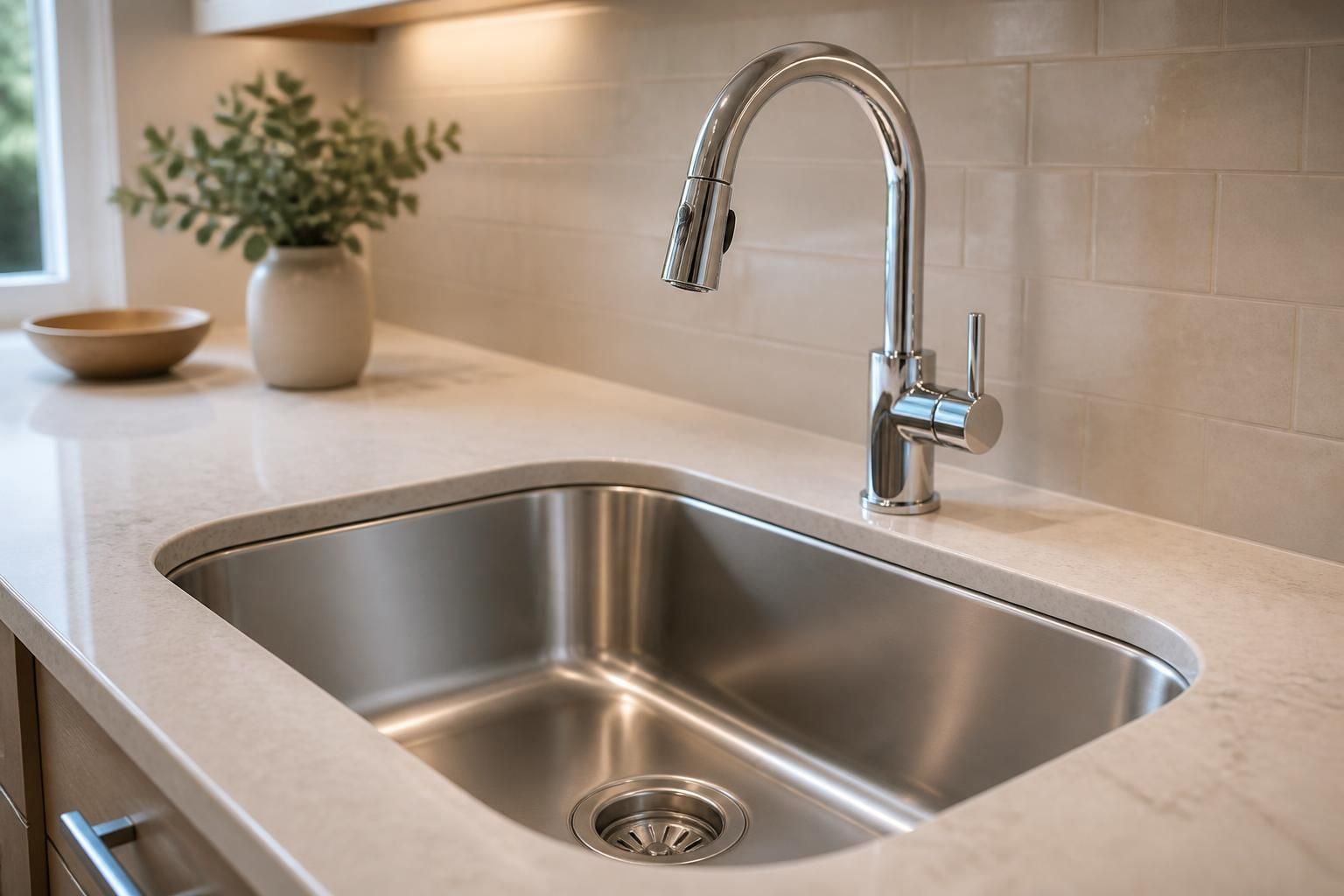
When your kitchen sink starts draining slowly, smells sour, or backs up during dishes, the problem usually gets worse fast. Grease, food scraps, soap residue, and years of buildup can narrow the line until water has nowhere to go.
If you are dealing with a clogged kitchen drain in Eugene, OR, Action Drain Oakridge-Westfir can help you get it cleared with a practical approach that matches the blockage. We answer the phone 24 hours a day, offer free estimates, and bring the right cleaning method to the job instead of guessing.
Kitchen drains often give a few clear warnings before they stop draining altogether. Catching those signs early can keep a small blockage from turning into a messy backup.
Those signs usually mean buildup has formed inside the line, or a deeper obstruction is catching grease and debris as it moves through the pipe.
Kitchen drains handle more than water. Every day use sends a mix of material down the line, and some of it clings to the pipe walls instead of washing away.
Cooking grease can cool and harden inside the drain, narrowing the passage and trapping other debris behind it.
Small pieces of rice, pasta, coffee grounds, peels, and scraps can collect inside the trap or line and start a clog.
Dish soap and detergent can leave a sticky film that helps other material latch onto the pipe interior.
When a garbage disposal is overloaded or used with the wrong items, it can push material into the drain faster than it can clear.
Action Drain Oakridge-Westfir approaches kitchen drain cleaning with the goal of removing the blockage, not just opening a temporary path through it. We look at the symptoms, listen to what the drain is doing, and choose a method that fits the clog.
We start by asking what the sink is doing, how long it has been slow, and whether the problem happens every time or only during heavy use.
For many kitchen sink blockages, drain snaking can break through the clog and restore flow without unnecessary disruption.
If grease and sludge have coated the line, hydro jetting may be used to scrub the inside of the pipe and clear out stubborn accumulation.
If the drain has clogged more than once, we look for signs that the blockage is deeper in the line or linked to a larger sewer issue.
This kind of service is especially useful when the sink seems to clear and then slows again a few days later. That pattern often means the blockage was only opened partway.
A clean kitchen drain still needs smart use. A few habits can reduce buildup and help your line stay open longer between service visits.
These habits do not replace professional cleaning, but they do help slow the return of common kitchen buildup.
When you call for kitchen drain cleaning, we keep the process straightforward. You tell us what the sink is doing, and we help narrow down the likely cause before work begins.
For many Eugene, OR homeowners, the goal is simple: get the sink usable again without dragging the problem out over several visits. We focus on practical steps, clear communication, and upfront pricing so you know what the service covers before the work starts.
It helps to note whether both sides of a double sink are affected, whether the disposal is involved, and whether any other fixtures are slow at the same time.
We work to clear the blockage, remove buildup where needed, and check that the drain can handle normal kitchen use again.
If the clog was caused by recurring grease or debris, we can talk through what likely led to it and what to watch for next time.
Some kitchen clogs start as a mild annoyance and turn into a full backup with one more sink load. If your drain is slow enough to interrupt cooking, dishwashing, or cleanup, it is worth scheduling service before the line closes off completely.
You should also call if you notice any of these patterns:
Those symptoms can point to a blockage farther down the line, not just a problem at the sink itself.
Action Drain Oakridge-Westfir serves Eugene, OR and nearby communities with drain and sewer services built around clear answers and fast response. For kitchen drain cleaning, that means we do not waste time with guesswork when your sink is already out of commission.
Homeowners call us when they want a straightforward fix for grease, food buildup, and stubborn sink clogs. We bring the same practical mindset to every job, whether the issue is a slow drain, a recurring blockage, or a backup that needs a more thorough cleaning method.
If the kitchen sink at your Eugene home is slowing down, reaching out early can save time and reduce the mess. Action Drain Oakridge-Westfir is ready to help with kitchen drain cleaning that gets to the source of the problem.
Grease, food particles, soap residue, and disposal waste are the most common causes. Over time, they stick together and form a blockage inside the line.
Odors often come from buildup sitting in the drain or trap. As that material breaks down, it can release a strong sour or rotten smell.
Yes. A disposal can push too much material into the line at once, or grind items that do not break down well, which can lead to a clog farther down.
That often means the blockage is close to the sink connection or inside the shared drain line. It still needs attention, since the clog can spread or worsen.
Not always, but repeated slow drainage can be a sign that the blockage is beyond the immediate sink line. A closer look can help determine whether the issue is local or deeper in the system.
Keep grease out of the sink, scrape food from dishes before rinsing, and avoid using the drain as a catchall for scraps. Regular cleaning helps, but good habits are what slow new buildup the most.

Get Help Now
Call Action Drain to discuss a clog, backup, sewer concern, or emergency drain issue. We will help you figure out the next step and provide a free estimate.